Friday, 16 December 2022

Friday, 30 October 2020
More travellers, including those from Japan and Thailand, can serve COVID-19 stay-home notice at place of residence
More travellers, including those from Japan and Thailand, can serve COVID-19 stay-home notice at place of residence
From next year, Singapore citizens and permanent residents who last left Singapore before Mar 27 will have to pay for their stay at dedicated stay-home notice facilities, says MOH.

SINGAPORE: Travellers from more countries will be allowed to serve their 14-day stay-home notice at their place of residence in Singapore instead of a dedicated facility from Nov 4.
The countries are Estonia, Fiji, Finland, Japan, Norway, South Korea, Sri Lanka, Thailand and Turkey, said the Ministry of Health (MOH) in a news release on Tuesday (Oct 27).
To be able to opt out of staying at a dedicated facility, travellers from those places must not have visited any other country in the last 14 days before entering Singapore.
They must also be living alone at their place of residence or with household members who are also serving a stay-home notice of the same duration and with the same travel history.
Applications to opt out of dedicated facilities open on Nov 2, for arrivals on or after Nov 4.
Singapore citizens and permanent residents must submit an application before their arrival through the Safe Travel Office website.
"All travellers must present the approval to opt out upon arrival in Singapore," said MOH.
"As the list of countries will be updated from time to time depending on the public health risk assessment, all travellers must be prepared to be subject to the prevailing border measures upon entry, including stay in dedicated SHN (stay-home notice) facilities and payment, where applicable."
Currently, except for countries that Singapore has unilaterally opened up to, travellers from selected low-risk countries or regions must serve a seven-day stay-home notice at their place of residence or suitable accommodation of their choice. All other travellers must serve a 14-day stay-home notice at dedicated facilities.
All travellers who opt out of staying in dedicated facilities must stay in their declared place of residence at all times. They will be subject to electronic monitoring and physical spot checks.
TRAVELLERS TO BEAR COST OF STAY AT DEDICATED FACILITIES
MOH also announced that from Jan 1, 2021, the Government will no longer waive the costs of staying at dedicated stay-home notice facilities for Singapore citizens and permanent residents who last left Singapore before Mar 27.
This is because the "vast majority" of Singapore citizens and PRs who last left Singapore within the past year have returned, the ministry said.
The Government will also no longer foot inpatient medical bills for Singapore citizens, PRs and long-term pass holders (LTPHs) who left the country before Mar 27 if they develop COVID-19 symptoms within 14 days of their arrival in Singapore.
This will take effect from Jan 1 next year.
“They will be able to tap on regular healthcare financial arrangements for their inpatient medical bills – SCs and PRs may access Government subsidies and MediShield Life/Integrated Shield Plan to help pay for their bills, while LTPHs may tap on their usual financing arrangements, such as private insurance,” the ministry said.
It added that Singapore’s border measures will evolve as the global COVID-19 situation changes.
“We will continue to monitor the global health situation closely and update our border measures in accordance with the public health risk assessment," said MOH.
“If the situation in a country/region deteriorates, more stringent measures will be put in place to limit the risk of importation and prevent community transmission from imported cases.”
Thursday, 5 December 2019
Contactless immigration system at Changi Airport T4
The trial began on Nov 25 and is open only to Singapore citizens aged six and above holding passport numbers beginning with the letter "K", and whose passports were issued after Jan 1, 2018.
The Immigration and Checkpoints Authority (ICA), which is running the trial, said travellers using the contactless immigration clearance lane should remove sunglasses, caps or other headgear that could obstruct their eyes or face when passing through the lanes.
~Straits Times~
Thursday, 22 August 2019
CAAS chief sets sights on faster airport clearance

If the technology is proven reliable, a smart digital tower, utilising cameras along Changi Airport's runways as well as artificial intelligence, could eventually replace physical control towers.PHOTO: ST FILE
By 2024, air travellers should be able to arrive at the airport 85 minutes before their flight - a 30 per cent improvement from the current average of two hours.
That is the target set for the aviation community by Civil Aviation Authority of Singapore director-general Kevin Shum, who urged the industry to improve and simplify processes on Thursday (Aug 15).
He noted that while Changi Airport and the supporting aviation industry have been making "good progress" towards the goal of adopting technology to improve productivity, incremental change will not be enough going forward due to the demands in an increasingly globalised and digital environment.
"If we operate on a business-as-usual basis, we will need to hire and train 6,000 more skilled workers over the next decade. This will be very difficult given the shortage of manpower in Singapore," said Mr Shum.
Adding that he is optimistic the target can be achieved without compromising on service standards and while adopting sustainable practices for the environment, Mr Shum said achieving the goal would require "fundamental shifts" in terminal operations, airside activities as well as air traffic management.
"It will be something that can only be done by the whole community working together - regulators and policymakers, airport operator, airlines, immigration officers, ground-handlers, air traffic controllers," said Mr Shum, speaking at the launch of the Aviation Open House at Suntec Singapore Convention & Exhibition Centre.
The aviation authority also aims to make one in four jobs senior-friendly by 2030, said Mr Shum. To do this, senior workers will have to embrace changes and technology to upgrade their skills, and this would enable them to have longer and more meaningful careers, he added.
Mr Sunny Yang, Changi Airport Group's associate general manager of airside management, demonstrating the new simulator on trial that uses virtual reality for training Passenger Loading Bridge operators.
Some of the technological developments that would help to achieve this goal are on display at the biennial Aviation Open House, such as the smart digital control tower prototype that will go on trial later this year.
If the technology is proven reliable, the smart digital tower, which utilises cameras along Changi Airport's runways as well as artificial intelligence, could eventually replace physical control towers.
Other innovations on display include a speech recognition prototype that will automate and shorten the transcription process during an aviation incident investigation, developed by Mitre Asia Pacific Singapore, as well as an experimental project by European plane-maker Airbus to develop unmanned air delivery of parcels.
Visitors will also be able to interact with aviation industry representatives who will share their career experiences and provide advice to students and job seekers who are considering a career or education in the industry.
Interactive workshops will also be held, including two classes under the Airbus Foundation Little Engineer Programme that will see participants assembling their own A380 airplane model.
The Aviation Open House will be held from Aug 15 to 17 at the Suntec convention centre. Admission is free. Those who pre-register for the event will receive a free goodie bag.
More information is available at www.aviationopenhouse2019.sg
~Straits Times~
Friday, 19 July 2019
Scoot to operate from Changi Airport's Terminal 1 from Oct 22

A Boeing 787 Dreamliner aircraft operated by long-haul budget carrier Scoot, a subsidiary of File photo of a Boeing 787 Dreamliner aircraft operated by long-haul budget carrier Scoot parked on the apron at Changi
SINGAPORE: Low-cost carrier Scoot will move its operations from Terminal 2 to Terminal 1 (T1) at Changi Airport on Oct 22, it announced on Thursday (Jul 18).
The move aims to "facilitate Scoot's growth in the next few years", said the airline in a joint media release with Changi Airport Group.
"Since April 2019, Scoot has launched eight new destinations in China, India, Laos and Malaysia, as part of expansion plans for the future," it said.
The airline added that it was on track to launch nine more new routes by the end of next year.
With this growth expected to continue, Scoot said that customer experience will "play an even bigger role". Check-in experience, in particular, has been identified as one of the top three areas which the airline wanted to improve.
Scoot's check-in counters at T1 will be located at rows 5 to 7 on the departure level, according to a notice on its website.
Changi Airport has undertaken upgrading works over the last five years to expand the passenger handling capacity of T1, said the release.
Improved features include automated check-in kiosks and bag-drop machines at the departure hall, expansion of the meeters and greeters hall at the arrival level, as well as the integration of the terminal with Jewel Changi Airport.
Two belts have also been added to the baggage claim hall, and two of the belts have been lengthened to handle more arriving passengers.
Scoot CEO Lee Lik Hsin said that the airline has strived to provide its growing customers base "with enhanced efficiency from the moment they arrive at the airport".
"With the move, we hope to encourage more customers to use the expanded self-service facilities, to enjoy a quicker and more seamless check-in process," he added.
The airline last year announced that it would move operations to T1, but did not specify the date.
Scoot is the low-cost arm of Singapore Airlines and began flying in June 2012. In July 2017, it merged with Tigerair Singapore in a move that retained the Scoot brand.
The airline has a fleet of 20 Boeing 787 Dreamliners and 29 Airbus A320 aircraft.
Source: CNA/ad(hm)
Thursday, 11 July 2019
India's Vistara to launch flights to Singapore

Indian airline Vistara announced on Thursday (Jul 11) it would launch international flights in August, with Singapore as its first destination.
The full-service carrier will operate two daily flights to Singapore, one each from Delhi and Mumbai.
The Delhi-Singapore route will start on Aug 6 and the Mumbai-Singapore route will start on Aug 7, and the airline said it would soon expand its international network to other destinations.
Boeing 737-800NG aircraft will ply the two new routes, with business and economy class seats.
"We’re excited to start with Singapore as our first international destination, which we see as a very important market, given the opportunities it presents for corporate, business as well as leisure travel," said Vistara's chief executive officer Leslie Thng.
"As we soon take the ‘new feeling of flying’ to more international destinations, we hope to provide our customers from overseas the finest way to experience India, and inspire travellers from across India to explore more of the world.”
Vistara is a joint venture between Tata Sons and Singapore Airlines.
Bookings for flights to Singapore are "being opened progressively" on Vistara's website, mobile apps and through travel agencies, said the airline.
In its push to launch more international flights, Vistara said it has bought six Boeing 787-9 Dreamliner aircraft, scheduled for delivery between 2020 and 2021. The planes will be used for long-haul international operations.
Vistara has said the launch of international flights, which will give it greater scale to grow, is part of its path to profitability.
The new services could also ease pressure on international airfares from India, which rose by as much as 32 per cent after the collapse of Jet Airways earlier this year.
Jet Airways, which halted operations on Apr 17 after running out of cash, had a market share of around 12 per cent on international flights to and from India in 2018, according to government statistics.
Vistara met the requirement of having more than 20 jets needed for international flights in June 2018. However, it took longer than expected to receive further regulatory approvals.
Low-cost carrier AirAsia India, a joint venture between Tata Sons and AirAsia Group Bhd that operates narrowbodies, is also seeking approvals to launch international flights.
AirAsia India reached the 20 plane milestone in December and has said it wants to connect Indian passengers to destinations in Southeast Asia
Source: CNA/Reuters/nc(gs)
Tuesday, 25 June 2019
Bad weather, unauthorised drones cause more flight delays and diversions at Airport
Bad weather and unauthorised drone activities caused several flight delays and diversions on Monday (Jun 24) night, days after Changi Airport was forced to close one runway due to drone sightings.
Replying to CNA's queries, the Civil Aviation Authority of Singapore (CAAS) said that approximately 15 departures and three arrivals were delayed, while seven flights were diverted.
Last Wednesday, 38 flights were affected when drones were sighted around the airport.
"As a precautionary measure, arrival and departure flights were carefully regulated for short periods of time between 8.07pm and 9.07pm," said CAAS in an email.
One of those affected was Singapore Airlines (SIA) flight SQ963, which was flying from Jakarta to Singapore on Monday night.
The flight "experienced an extended holding period at Singapore Changi Airport and subsequently diverted to Batam", said an SIA spokesperson.
SQ963 landed in Batam at around 8.30pm and eventually departed for Singapore at around 11pm after refuelling.
CAAS said that investigations were ongoing.
It also said that it takes a serious view of errant operations of unmanned aircraft which may pose threats to aviation or endanger the personal safety of others, and will not hesitate to take enforcement action.
Offenders could face a fine of up to S$20,000 or a jail term of up to 12 months.
In Singapore, drones are prohibited from flying within 5km of an airport without a permit.
Law enforcement officers conduct regular surveillance patrols around Changi Airport and respond to sightings of unauthorised drones, said Senior Minister of State for Transport Lam Pin Min in Parliament earlier this year.
Source: CNA/ad(rw)
Friday, 14 June 2019
Dedicated facility for private jet passengers aims to make Seletar Airport a 'hub' for luxury market

A dedicated facility for travellers on private jets entering and leaving Singapore aims to grow Seletar Airport into a "hub" for the luxury market.
The business aviation centre (BAC), unveiled to the media on Tuesday (Jun 11), has a private drop-off area, a lounge, dedicated immigration security screening as well as other personalised services.
With faster clearance processes, passengers can expect to take no more than 10 minutes to breeze through the BAC from entry to exit, before boarding their jet.
This is the latest facility to open at Seletar Airport after its new S$80 million passenger terminal welcomed its first business passengers in November 2018. Spanning 10,000 sq m, the two-storey terminal is designed to handle up to 700,000 passengers a year.
Business travellers are a key part of the Seletar development, which was built to cater to the growing private and business jet market, as well as to free up space at Changi Airport. Since November 2018, SATS Seletar Aviation Services (SSAS) has handled more than 4,000 flight movements at the airport, of which close to 70 per cent are attributed to business aviation.
"Private jet travellers are usually on a tight schedule and travel frequently," said chairman of SSAS Bob Chi. "Saving time while travelling is naturally important to this segment of customers.
"They will find the seamless, fuss-free and personalised experience that cuts end-to-end travel time a great attraction. SATS hopes to support Changi Airport in their plan to grow Seletar Airport into a hub for business travellers and tourists travelling on private jets."
Seletar Business Aviation Centre 2nd Level Lounge

The lounge on the second level of the Seletar Business Aviation Centre (Photo: Jeremy Long)
While Changi Airport has a terminal - JetQuay - which can also serve private jets, Mr Chi said that the competition for landing slots at Changi due to its growth has led to the need for a dedicated facility at Seletar.
"It's not that we are not handling any private jets in Changi," he told reporters on the sidelines of a visit to the facility. "We do but the numbers are declining and the reason why they are declining is that they have shifted business here."
Opened in 2006, JetQuay not only handles private jets, but also provides VIP services to any passengers travelling on full-service carriers.
"The moment customers arrive at the kerbside, they want to be out on the aircraft within minutes. You can't really do that in Changi because the airport is very big. So from the kerbside up until the point you depart, it's going to take some time," added Mr Chi.
"There is a lot more flexibility that we provide because of the scale and size of the airport."
The business aviation centre is managed by SSAS, a joint venture company SATS formed with Jet Aviation and Universal Aviation. It has been in operation since November last year, and handles an average of 30 private jets daily.
Seletar Airport also handles commercial flights operated by Malaysian budget carrier Firefly.
Said Mr Chi: "We are looking about five per cent growth every year, so there is a potential, hopefully with this brand new facility we will be able to encourage more private jet operators to locate their jets here and therefore do more flights out of Seletar."
Source: CNA/mt(gs)
Monday, 3 June 2019
First look at Jewel Changi Airport’s Canopy Park, Sky Nets, slides and mazes
Jewel Changi Airport’s much-awaited play attractions on its top-floor Canopy Park, as well as its partially glass-bottomed bridge open to the public on Jun 10.
They include the Manulife Sky Nets, Discovery Slides, the Mirror Maze and Hedge Maze and the glass-bottomed Canopy Bridge which offers a stunning view of the HSBC Rain Vortex and Shiseido Forest Valley.
EXPLORE OUR INTERACTIVE: INSIDE JEWEL CHANGI AIRPORT
The attractions in the 14,000 sqm Canopy Park had not yet been opened to the public when Jewel officially threw its doors open last month.
On Thursday (May 30), Jewel announced pricing details for each of the attractions and gave the media a sneak preview. Entrance fees for Singapore residents to Canopy Park is S$4.50 and access to the various attractions ranges from S$7.20 to S$19.80.
THE MANULIFE SKY NETS

The Manulife Sky Nets at Jewel Changi Airport (Photo: Gaya Chandramohan)
The scale of the Sky Nets in an indoor setting is a world first, organisers said in a news release. The yellow, blue and green bouncing nets span 250 metres and offer an additional thrill factor from a 8-metre-high lookout point.
Those who prefer taking in the sights of Jewel at a tamer pace can stroll across the 50-metre-long walking Sky Nets. The undulating brown walking nets, directly below the bouncing nets, form a taut web that straddles a five-storey-high void. The experience is designed to make you feel like you are walking on air, 25 metres above ground.
The nets are made of sturdy material and strong enough to hold 1,000 people at once, said Thomas Ferwagner, one of the two designers who conceptualised the sky nets.

Walking through the Manulife Sky Nets at Jewel Changi Airport. (Photo: Gaya Chandramohan)
The price of admission for the Bouncing Nets is S$19.80 for adult Singapore residents and S$14.40 for children and seniors. For all other visitors, it is S$22 for adults and S$16 for children and seniors.
Tickets for the Walking Nets will set you back S$13.50 for adults and S$9 for children and seniors if you are a Singapore resident. For others, they are priced at S$15 for adults and S$10 for children and seniors.
THE HEDGE MAZE

Exploring the Hedge Maze at Jewel Changi Airport. (Photo: Gaya Chandramohan)
Beneath Jewel’s glass canopy runs Singapore’s largest maze: The Hedge Maze. Wind your way through it and you will end up at the watch tower for a bird’s eye view of the attraction.
The maze also has gates that can be pushed so you can change your path.
For Singapore residents, entry into the Hedge Maze is priced at S$10.80 for adults and S$7.20 for children and senior citizens. The standard ticket price for all other visitors is S$12 for adults and S$8 for children and seniors.
THE MIRROR MAZE

Exploring the Mirror Maze at Jewel Changi Airport. (Photo: Gaya Chandramohan)
The other labyrinth attraction, the Mirror Maze has kaleidoscopic walls and the cover of foliage overhead. Those entering the maze are equipped with a foam noodle to help them feel their way around, in case they find the multitude of mirrors disorientating.
To immerse yourself in an environment of infinite reflections and endless hallways, the ticket price is S$13.50 for an adult Singapore resident and S$9 for children or seniors. The rate for all other visitors is S$15 for adults and S$10 for children and seniors.
THE DISCOVERY SLIDES

Having a go at the Discovery Slides at Jewel Changi Airport. (Photo: Gaya Chandramohan) Nearby sits an art sculpture that doubles up as a playground. The Discovery Slides attraction is made up of four slides and the work of art sits at an incline – 3m high on one end, and about 7m high on the other.
At the edge of its 6.5m-high platform is a viewing deck that offers a picturesque view of the HSBC Rain Vortex and the lush indoor forest that lines Jewel.

A woman goes down one of the Discovery Slides at Jewel Changi Airport (Photo: Gaya Chandramohan)
The underside of the mega slide is also covered in a mirror finish, helping the playground blend naturally into the Jewel’s greenery.
THE CANOPY BRIDGE

Taking in the HSBC Rain Vortex from the Canopy Bridge at Jewel Changi Airport. (Photo: Gaya Chandramohan)
Another highlight of Jewel opening on Jun 10 is the Canopy Bridge.
The 50m-long suspended bridge offers a dizzying vantage point for you to take in Jewel’s centrepiece, the Rain Vortex, at 23m above the ground.
Thrill-seekers might appreciate the glass-panel flooring at the centre of the bridge for guests to look through to level 1.
The price to walk on the bridge is S$7.20 for all Singapore residents (adults, children and seniors). For non-Singapore residents, tickets are S$8.

The Canopy Bridge at Jewel Changi Airport. (Photo: Gaya Chandramohan)
Basic entry into the Canopy Park is priced at S$4.50 for Singaporean residents and S$5 for all others. This lets you wander around Topiary Walk, Discovery Slides, Foggy Bowls and Petal Gardens.
Source: CNA/gc
Sunday, 21 April 2019
Firefly resumes flights to Singapore as first plane lands at Seletar Airport

Firefly flight FY3126 gets a ceremonial water cannon salute after it lands at Seletar Airport on Sunday April 21, 2019. (Photo: Lip Kwok Wai)
Malaysian budget carrier Firefly's first flight to Seletar Airport touched down at 10.53am on Sunday (Apr 21).
Flight FY3126 from Subang Airport landed as the airline resumed services to Singapore after five months due to an airspace dispute between Singapore and Malaysia.
Singapore Transport Minister Khaw Boon Wan welcomed his Malaysian counterpart Anthony Loke who was on board the flight.
There will be two Firefly flights a day between Subang and Seletar Airports from Apr 22 to 28, followed thereafter by six daily flights.

Singapore Transport Minister Khaw Boon Wan welcomes his Malaysian counterpart Anthony Loke who arrived at Seletar Airport on the Firefly flight. (Photo: Lip Kwok Wai)
The airline had suspended its flights to Singapore in December last year after failing to obtain approval from Malaysia’s aviation regulator to move its operations form Changi Airport to Seletar Airport.
Malaysia had opposed the Instrument Landing System (ILS) procedures in use at Seletar Airport, saying it restricted the construction of tall buildings at Johor's Pasir Gudang.
However, Singapore has said that the ILS simply puts on paper the existing flight paths, making safety rules clearer and more transparent. Singapore's Ministry of Transport (MOT) has also said that the procedures do not impose any additional impact on other airspace users as well as businesses and residents in Johor.
After months of negotiations, Malaysia suspended its permanent Restricted Area over Pasir Gudang indefinitely, while Singapore withdrew the ILS procedures at Seletar Airport, paving the way for Firefly to resume operations.
The ILS procedure refers to an assisted navigational aviation facility at the airport which provides vertical and horizontal guidance to pilots while the flight is descending and approaching the runway.
ILS would have allowed pilots to land in all weather conditions, even when visibility is low. It had been put in place at the request of Firefly.
Singapore and Malaysia will instead work together to develop GPS-based instrument approach procedures for Seletar Airport.
Before the suspension, Firefly offered 20 daily flights between Singapore and Subang, Ipoh and Kuantan.
Source: CNA/mn
Monday, 15 April 2019
Malaysian carrier Firefly to resume Singapore flights with twice-daily trips
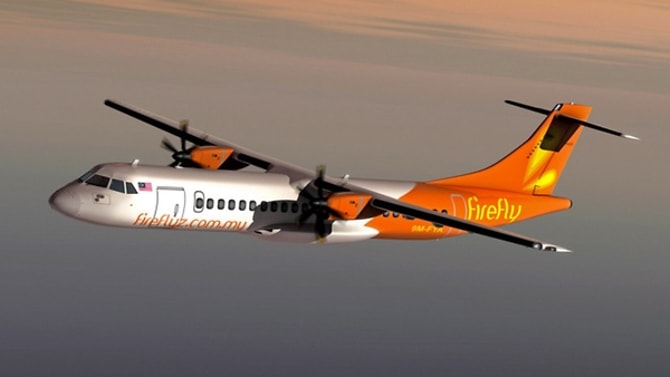
Malaysian budget carrier Firefly said on Friday (Apr 12) that it will resume flights to Singapore with two trips a day.
The move comes after Malaysia suspended its permanent Restricted Area over Pasir Gudang indefinitely, while Singapore withdrew the Instrument Landing System procedures at Seletar Airport, paving the way for Firefly to resume operations.
Firefly will offer two flights a day between Subang and Seletar Airports from April 22 to 28, followed thereafter by six daily flights, it said.
"The schedule takes into account stringent safety measures that are in compliance with the technical requirements established by the Civil Aviation Authority of Malaysia," it said.
Chief executive officer Philip See said the flights will play a significant role in strengthening economic and social ties between Singapore and Malaysia.

"It's important for business, for connecting family and friends, and for tourism, to have our Singapore flights reinstated," he said.
"The new schedule, along with other service enhancements, will be progressively rolled out over the coming months."
Going forward, the 12-year-old airline aims to resume a full schedule once the necessary technical and regulatory approvals are secured.
Tickets are available for purchase from Friday via website www.fireflyz.com.my, the mobile app or the call centre at 03-7845 4543.
Firefly suspended its flights to Singapore in December last year, after it was unable to obtain approval from Malaysia’s aviation regulator to move its operations from Changi Airport to Seletar Airport.
Before the suspension, Firefly offered 20 daily flights between Singapore and Subang, Ipoh and Kuantan.
Source: Bernama/CNA/aj(mi)
Sunday, 14 April 2019
Jewel Changi Airport set to be icon for Singapore

Jewel Changi Airport architect Moshe Safdie drew inspiration from the science fiction film Avatar (2009), which had a landscape that he says blew his mind.
Multi-award-winning architect Moshe Safdie says that he expects Jewel Changi Airport to become a powerful icon for Singapore.
Mr Safdie, 80, who had also designed Marina Bay Sands (MBS), said he did not expect that MBS would become a landmark symbol of Singapore, possibly exceeding the status of the Sydney Opera House.
"I do predict now, though, that Jewel will become an icon for Singapore no less than MBS," he told reporters on Friday (April 12), ahead of Jewel Changi Airport's official opening on Wednesday.
While many architects focus on the outward structure and form of a building, much of Jewel's beauty lies within the 135,700 sq m development. The centrepiece of Jewel is a five-storey garden with a 40m-tall indoor waterfall and more than 2,000 trees and palms.
"That is the difference between the 10 minute 'wow' and the long lived 'wow'," said the Canadian-Israeli designer.
When he first discussed with property developer CapitaLand for a thematic attraction to go with the retail space for Jewel, he said "the obvious ideas started flying around".
"Dinosaurs, an aquarium, some thematic kind of attraction. But we, as the architects in the room, resisted this notion of something limited."
Jewel Changi Airport ready for its coming-out party and plans to wow 500,000 visitors over next six days Mr Safdie, founder of Safdie Architects, says that such attractions have a limited lifespan and would appeal only to a particular age range.
"Why would passengers want to come back again after seeing it once?"
Instead, he aimed for an attraction that would appeal to every age and income group.
"That led me to think of some kind of great paradise and a mystical garden. Something that would be appropriate for an airport and that is a place of serenity and repose."
He drew inspiration from the science fiction film Avatar (2009), which had a landscape that he says blew his mind.
"At some point we tried to get a hanging rock for the garden. To be placed in the middle of the dome. But it was too heavy."
The shape of the building, he says, is like a doughnut, or in geometrical terms, a torus.
The unique shape means that rain that falls on the dome naturally collects towards the centre, thus forming the building's indoor waterfall.
The HSBC Rain Vortex, the world's tallest indoor waterfall, features water falling through the roof at a velocity of 10,000 gallons per minute.
Jewel Changi Airport opens
The water is then circulated through pipes concealed within the building. A water tank with a 500,000-litre capacity is stored at basement three of Jewel. Rainwater is also harvested for the landscape irrigation system.
While Mr Safdie had quite a free hand, he faced some challenges while designing Jewel.
One consideration was the existing Skytrain tracks that will run through Jewel.
"When we designed the torus, we wanted it to be symmetrical with the oculus in the middle. That would have meant that since the train runs in the centre line of the building - that every train coming through would get a train wash. I think that would have caused issues."
So the oculus of the torus had to be moved off-centre, which was a "geometric nightmare". But he said the asymmetry makes the building more beautiful and "created a tension in the geometry".
Another challenge was height restrictions - the development had to be below the radar of Changi Airport's iconic control tower.
"That limited us to about 37m above street level. We could have used more height to get more curvature to the dome as it would have been more efficient."
But the biggest challenge, said Mr Safdie, was making sure that the building was comfortable for both people and plants.
"We needed to get enough sunlight in for the plants but still keep the temperature at a comfortable 24 degrees for the people."
Besides air-conditioning, there are also chilled pipes in the floors and fogging devices near the top of the waterfall to cool the air. In an open space in Canopy Park, retractable shades have been mounted on the roof to help provide shade.
Asked what he thinks of comments that Jewel looks like MBS, Mr Safdie is unperturbed.
"If Jewel looks like Marina Bay Sands, then I look like a horse. I can't see it. Yes, it has similar ingredients, it has shopping and gardens. But in essence they are totally different."
~News courtesy of Straits Times~